
Wednesday 1:45 PM - 2:45 PM · B405-B406a
Transition from Data Analyst to Data Engineer: Upgrading Skills from DataFlows Gen2 to Notebooks
Nikola Ilic
Data Mozart, Microsoft Data Platform MVP

Thomas LeBlanc
Business Intelligence Architect | Microsoft Data Platform MVP
The session shows an analyst how to use notebooks to perform the same actions as Dataflow Gen2. Looking at 4 areas: source, transformation, cleansing, and destination, examples include append/merge query to dataframe joins, text replace functionality, split and concatenate columns, as well as pivot/unpivot, data type changes, and removing duplicates. We will finish off with engine optimizations.
Wednesday 3:05 PM - 4:05 PM · B406b-B407
Deliver Trusted Data Products for Analytics and AI in Microsoft Fabric

Craig Gravina
Chief Technology Officer at Semarchy
Microsoft Fabric accelerates analytics and AI at scale but without governed, trusted data, results fall short. This session’s demo showcases how data products, and semantic models, are utilized to succeed with data and AI initiatives. Learn how modern AI-driven, DataOps-built MDM delivers trusted data products into OneLake, enabling business and agentic users to succeed with high quality data.
Wednesday 3:05 PM - 4:05 PM · TMB 1
Materialized Lake Views: Simplifying Your Medallion ETL

Justin Cunningham
Director, Data Analytics
Materialized lake views turn Spark SQL into auto-orchestrated smart tables in your Fabric lakehouse. In this session, learn how to replace fragile ETL with declarative medallion layers, understand refresh and lineage, and decide when materialized lake views beat notebooks, jobs, or warehouses.
Wednesday 4:25 PM - 5:25 PM · C111-C112
CORENOTE: Fabric Data Engineering Roadmap

Justyna Lucznik
Director of PM
Fabric Data Engineering empowers data engineers to build out a lakehouse architecture and transform their data, at scale, using Spark. Join this session to learn more about the latest updates to Data Engineering in Fabric, as well as what's coming in the near future.
Wednesday 4:25 PM - 5:25 PM · B313b-B314
Config-Driven Data Engineering in Microsoft Fabric

Pierre LaFromboise
Covenant Technology Partners - Senior Architect Data & AI
Data-engineering often results in hundreds of one-offs with duplicate code and inconsistency, making change slow, brittle, and costly. We will introduce and demo new metadata and config-driven patterns for PySpark integration in Fabric. You will learn to implement reusable patterns that simplify development, scale reliably, cut duplication, and improve governance across Fabric environments.
Thursday 8:00 AM - 9:00 AM · C111-C112
Enterprise-Grade Migration to Microsoft Fabric: Modernizing Lakehouses, Pipelines, Analytics & AI
Lalit Goyal
Data & AI leader
Tyler Stemm
Manager, Data Engineering & Analytics at Vita Coco
Microsoft Fabric is rapidly becoming the unified platform of choice for enterprises seeking to modernize data engineering, analytics, and AI. But migration from Synapse, ADF, Snowflake, Databricks, and on-prem systems requires more than a lift-and-shift.
Thursday 8:00 AM - 9:00 AM · C211-C213
Spark Performance Deep Dive: Configuration, Debugging, and Performance Tuning
Ashit Gosalia
Engineering Manager

Tim Arif
Microsoft Global Black Belt Analytics
Unlock the full potential of Apache Spark with this in-depth session focused on performance optimization. We’ll explore advanced configuration strategies to fine-tune executors, memory, and partitioning for maximum efficiency. Learn how to leverage Spark’s built-in tools for debugging and monitoring, including the Spark UI and metrics, to identify bottlenecks and optimize workloads.
Thursday 8:00 AM - 9:00 AM · C302
Accelerating Data and AI with Azure Databricks
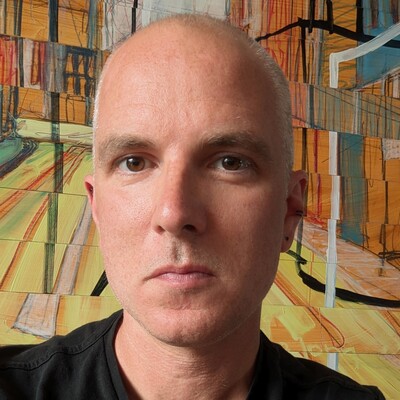
Robert Saxby
Director of Product Management, Databricks
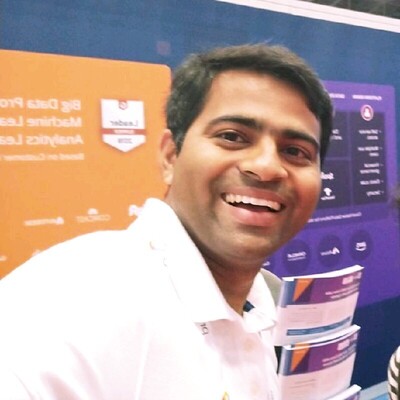
Surya Sai Turaga
Field Engineering Leader, Databricks
Get the most out of your investments with Azure Databricks. Learn how the deep integration in the Azure ecosystem accelerates workloads, optimizes performance, and maximizes value. See how the Databricks Data Intelligence Platform on Azure streamlines analytics and AI.
Thursday 9:30 AM - 9:50 AM · Expo Innovation Theater
Transform your data platform into an AI-ready foundation for growth

Rahul Athalye
Vice President and Service Line Head, Data & Analytics
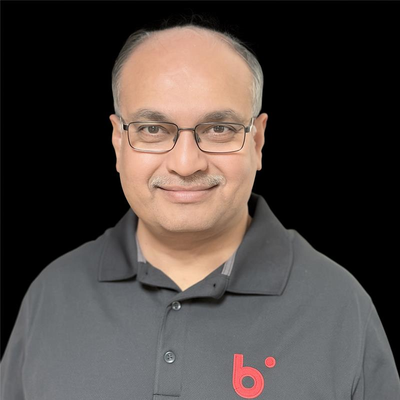
Ravi Gunturu
VP of Data & AI @ Bitwise
Modernize your end-to-end data platform to Fabric and unlock AI/ML enabled potential in workloads, analytics, and collaboration. During this session, we will focus on agentic AI methods of automation during the migration process, achieving 60% improvement in productivity.
Thursday 10:10 AM - 11:10 AM · B312-B313a
Delta Lake in Fabric: Internals, Innovations, and What’s New in Delta 4.0
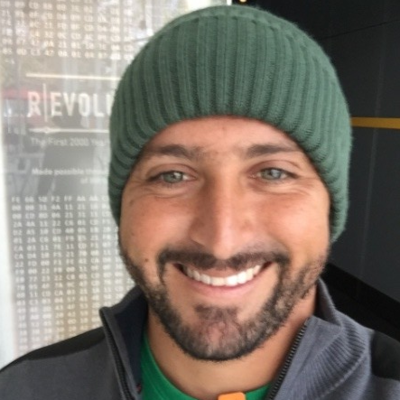
Daniel Coelho
Microsoft, Principal Program Manager

Miles Cole
Principal Program Manager, Microsoft
From Delta 4.0 to Microsoft’s latest runtime innovations, dive into how Delta features really work. Learn Liquid Clustering and when to use it, why file size matters and how to put table tuning on autopilot, how to compact tables dramatically faster, and much more. Leave a time-traveling Delta Lake wizard ready to build fast, flexible, and scalable tables that deliver high-performance at any scale
Thursday 10:10 AM - 11:10 AM · C301
Unity in Action – Building Enterprise AI on a Unified Semantic Foundation

Chandler Stevens
Vice President - Solutions Engineering
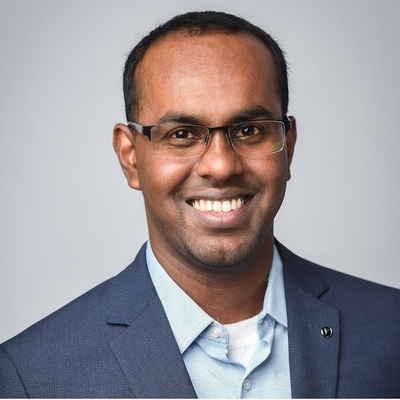
Subbu Muthukrishnan
Democratizing Data to Drive Actionable Insights
Enterprise AI requires unified semantic foundations where governance and intelligence flow seamlessly. Learn to architect data platform that use Ontology as your semantic backbone, Data Agents for insights, and Operational Agents for action. Through real-world examples, discover how organizations use AI agents to reliably detect, contextualize, attribute, and act on governed data.
Thursday 11:30 AM - 12:30 PM · C108-C109
Adapting to Fabric Spark: A SQL Server Practitioner’s Path Forward
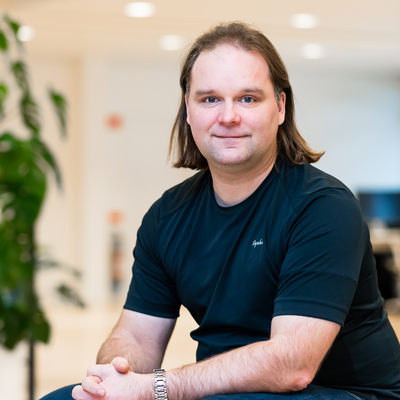
Christian Henrik Reich
Sr. Solution Architect at Microsoft
This workshop is for SQL Server practitioners, used to reading query plans and caring about stats, stepping into Fabric. It covers Lakehouses and Spark, showing how your skills still apply in:
- Understanding the Spark engine
- Reading query plans and statistics
- Using the Delta Lake engine
The takeaway is that approaches might differ, but the knowledge carries over.
Thursday 1:00 PM - 1:20 PM · Expo Insight Theater
Building a Zero-Copy Enterprise Data Platform for CITGO

Hemanth Gaddale
Program Manager
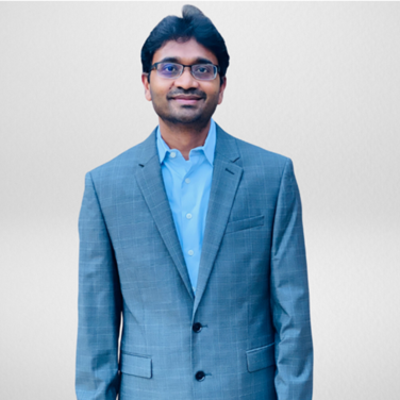
Siva Pamarti
Manager, Data & AI
Can enterprises enable advanced analytics on a self-servicing platform without compromising governance? In this session, we’ll share how LevelShift redesigned CITGO’s data platform on Microsoft Fabric balancing control and autonomy. Using domain-based workspaces, OneLake zero-copy access, CI/CD automation, and layered security, eliminated duplication, and scaled governed self-service.
Thursday 1:30 PM - 1:50 PM · Expo Innovation Theater
From Dashboard to Executive Business Reviews in Seconds

Kelly Welch
SVP of Sales at Rollstack
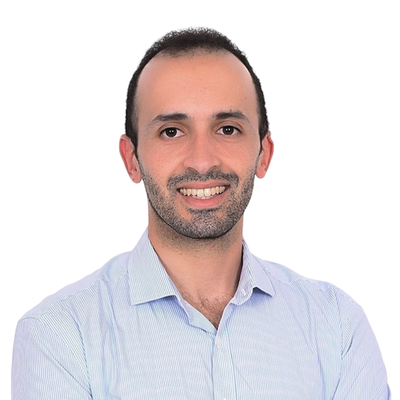
Younes Jallouli
Chief Product Officer Rollstack
Discover how data leaders at companies like Equality Health, Tripadvisor, and T. Rowe Price automatically create thousands of executive and client ready slide decks. This session will teach you how to programmatically generate and update PowerPoint and Google Slides directly from your Power BI data—ensuring your stakeholders and customers get reports in the slide format they need, all while eliminating extra work and governance risk for your data team.
You’ll learn to: -Automate recurring reports (QBRs, Client Updates, Financial Decks). -Keep your slides in perfect sync with your semantic models. -Instantly generate hundreds of personalized deck variations (e.g., one unique deck per region or client) from a single Power BI report.
Thursday 1:30 PM - 1:50 PM · Expo Solution Theater
How Impetus LeapLogic Automates the Move from Legacy Systems to Microsoft Fabric
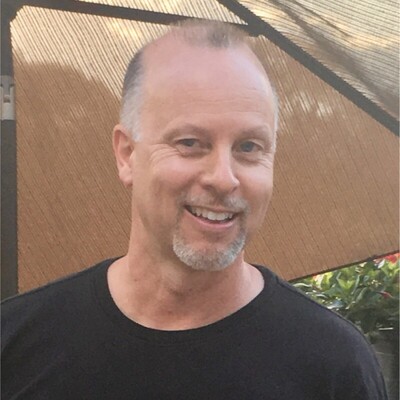
Michael Lass
Senior Data Solution Architect at Impetus
Discover how Impetus LeapLogic helps teams embrace Microsoft Fabric’s unified, AI-driven architecture with speed and confidence. Join Impetus session to see up to 95% automated conversion of SQL, ETL, and BI logic—plus optimization, lineage, and validation mapped to Fabric-native patterns. Learn proven migration strategies, governance insights, and faster onboarding for Copilot-powered analytics.
Thursday 2:00 PM - 3:00 PM · C113-C114
Best Practices for Library Management with Microsoft Fabric Spark Environments

Nupur Shukla
Senior Software Engineer

Shuaijun Ye
Product manager, Microsoft
Managing Python and JAR library dependencies is key to building reliable, performant, and maintainable Spark workflows.
Learn how to ensure reproducibility through consistent dependency handling, use lightweight setups to accelerate development and testing, enable inline installs for ad-hoc workloads, and integrate private repositories for secure, compliant library management.
Thursday 2:00 PM - 3:00 PM · C102
Fabric Development: Repos, Collaboration and Deployments

Mike Diehl
Director of Data Engineering and Business Intelligence
Are you a Fabric developer and struggling with using good development practices? Implementing practices such as source code control, branching strategies, code reviews (PRs), and automated deployments to independent environments (ie. workspaces) can transform how you work with Fabric. We'll show how to implement them and work around the gotchas that will bite you in your Fabric projects.
Thursday 2:00 PM - 3:00 PM · C302
The Golden Thread: Architecting an End-to-End OneLake Fabric for Analytics, RTI, and RAG

Loy Sikdar
Senior Solutions Architect at Perficient, Microsoft Consulting
The Golden Thread, a unified OneLake-driven Microsoft Fabric architecture for analytics, predictive intelligence, and retrieval augmented generation (RAG). Learn how to evolve from siloed analytics to a scalable Medallion ecosystem with metadata-driven orchestration, hybrid CI/CD, and integrated real-time + historical data flows. We’ll also walk through a predictive maintenance scenario that demonstrates how to modernize workloads and accelerate insight delivery across any industry.
Thursday 3:20 PM - 3:40 PM · Expo Innovation Theater
Autonomous AI Agents in Production: Komatsu with CluedIn, Fabric & Purview

Tim Ward
CEO and Co-founder, CluedIn
This session presents Komatsu’s production deployment of autonomous AI agents over a governed Microsoft Fabric estate integrated with Purview and CluedIn. We cover the architecture, agent execution model and parallelism, governance and audit controls, and concrete lessons learned from operating agents at 3–10M records/day, including failure modes and rule-performance tuning.
Thursday 3:20 PM - 3:40 PM · Expo Solution Theater
What Microsoft Fabric Looks Like with End-to-End Automation

Endika Pascual
Principal Solutions Architect
Production-grade Microsoft Fabric implementations require coordinated ingestion, data refinement, warehouse operations, and governance. This session examines how Data Factory pipelines, OneLake Medallion architecture, and Fabric Warehouses work together in automated platforms, focusing on orchestration and warehouse automation patterns for reliable, repeatable analytics.
Thursday 4:15 PM - 5:15 PM · TMB 4
The AI-Native Data Engineer

Deepa Rajagopal
Microsoft | Senior Program Manager
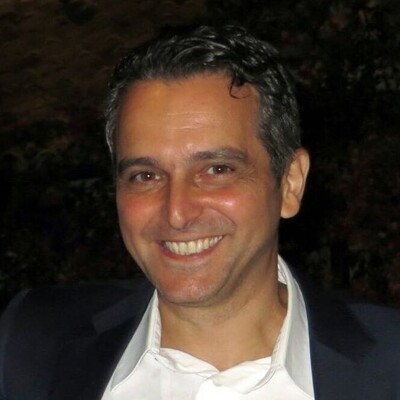
Piero Morano
Principal PM Manager - PM Lead Data engineering Developer experience
This session explores how AI is transforming data engineering. We’ll walk through the latest AI innovations in Microsoft Fabric including AI‑powered notebooks, deep Copilot integration in VS Code, and CLI workflow. We will explore how these capabilities are changing how data engineers build, iterate, and operate day to day. Discover how agentic Copilot across Fabric Web, VS Code, and CLI removes coding barriers, accelerates time to value and automates repetitive tasks, leaving engineers to focus on higher-order problems.
Thursday 4:15 PM - 5:15 PM · C105-C106
Own Your Workflow: Build Notebooks Locally & Deploy Them to Fabric

Andy Parkerson
Data Engineer
Break free from browser IDE in Fabric Python and PySpark Notebooks! Learn to install Python and Spark, create your own local lakehouse, and develop Python and PySpark Notebooks in Visual Studio, VSCode, or whatever IDE you're used to. We'll start with a clean machine and download, install and configure everything we need. We will create a feature-rich notebook, and wrap up by deploying to Fabric.
Thursday 4:15 PM - 5:15 PM · C202-C204
Agentic Data Engineering on Microsoft Fabric: Building Adaptive Pipelines

Colin Pop
Senior Director, Analytics Architect at Avanade
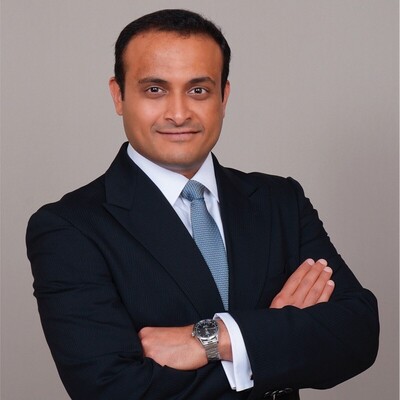
Mittul Mehta
Chief Information Officer of Tevogen Bio

Nina Arora-Rowland
Data and AI Practice Lead - Avanade/Accenture
What happens when data engineering meets agentic AI? In this technical session, we explore how autonomous agents are reshaping the way pipelines are built, managed, and evolved on Microsoft Fabric. From real-world scenarios to emerging architectural patterns, we’ll examine how intelligent systems can move data operations beyond static scripts toward adaptive, context-aware workflows. We’ll also address practical considerations around governance, trust, and enterprise readiness as teams experiment with more autonomous data environments. Join us to unpack what it takes to move from traditional pipelines to intelligent, evolving data systems.
Friday 8:00 AM - 9:00 AM · C102
Inside of OneLake Spark Catalog and migration to schema-enabled lakehouses

Ted Vilutis
Product Manager
Discover the capabilities of the OneLake Spark Catalog, which supports Lakehouse schemas, cross-workspace querying, row- and column-level security, and more. Examine techniques for querying objects using Spark within Fabric, including simultaneous access to Data Warehouses, Mirror Databases, and Lakehouses. Finally, review best practices and strategies for enabling OneLake Spark Catalog for all Spark runs and migrating to schema-enabled lakehouses.
Friday 8:00 AM - 9:00 AM · C301
Trusted Contextual Data Foundation for reliable AI outcomes
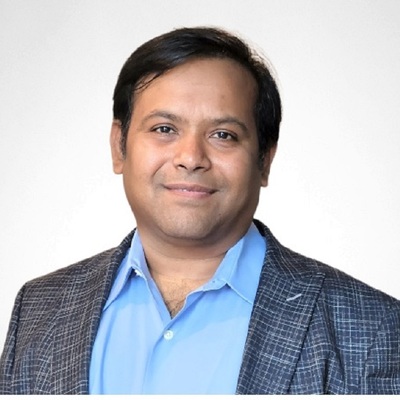
Ajay Gollapalli
Solution Director (Azure) , Informatica

Gopi Sankaran
Vice President, Strategic Ecosystems, Informatica
Organizations struggle to trust their data - to contextualize and operationalize it safely for AI driven decision-making. As enterprises move beyond dashboards and reports towards agentic AI systems that reason, decide and act, the limitations of fragmented data platforms, inconsistent definitions and disconnected governance are impossible to ignore. Trusted context enabled by clean, governed and connected data is the critical ingredient in enterprise AI success.
This session highlights strategies for bringing multi-domain master data management, data quality, governance, privacy and policy enforcement, and end to end lineage to ensure that every dataset consumed by analytics, BI and AI agents is trusted, governed and ready for AI agents to reason with enterprise truth.
Friday 10:10 AM - 11:10 AM · C211-C213
Microsoft Fabric Essentials: No-Code to Pro-Code with Dataflows Gen2
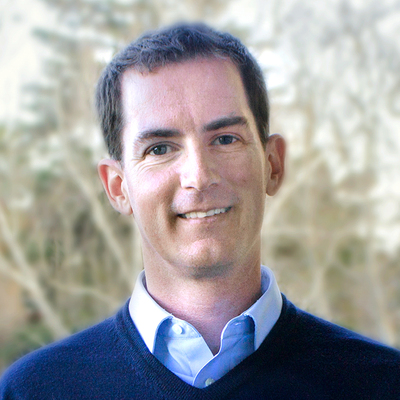
Eric Overfield
Creospark, RD, MVP, MCT
Microsoft Fabric Dataflows Gen2 empowers everyone to prepare data efficiently. In this session, learn no-code steps for quick wins, low-code techniques with Power Query for flexibility, and pro-code customization with M for full control. Discover practical strategies to simplify data prep and enable governed, reusable data at scale.
Friday 10:10 AM - 11:10 AM · C301
90 Days, 1 Fabric Foundation: Delivering SQL Mirroring at Scale
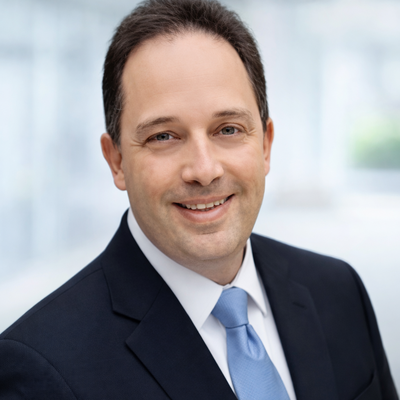
Alex Carvalho
Principal Consultant (Data & AI / Data Practice)

Rick Weber
Sr. Director - Enterprise Insights & Analytics
In this case study, Caplugs transformed fragile pipelines by shifting architecture—not the business. See how Fabric SQL Mirroring replaced brittle ingestion, cut technical debt, and delivered a stable, low-latency foundation. Learn how unified ERP analytics, governance, and scalable patterns created a sustainable, enterprise-ready Fabric implementation.
Friday 11:30 AM - 12:30 PM · C113-C114
Mastering Fabric Data Engineering Admin and Capacity Management
Christopher Finlan
Principal PM Manager

Santhosh Kumar Ravindran
Senior Product Manager, Microsoft Fabric Data Engineering
Optimize Microsoft Fabric Data Engineering for production. Learn about governance controls for Notebooks, Lakehouses, and Spark Job Definitions. We'll cover administrative roles, capacity management for cost and performance, and scaling best practices.
Friday 11:30 AM - 12:30 PM · C202-C204
Patterns and Best Practice with Fabric CI/CD

Ted Pattison
Principal Program Manager - Power BI Team
This session teaches best practices with Fabric GIT integration to ensure changes to Fabric projects are automatically tested and deployed, leading to faster and more reliable releases. Attendees will learn effective branching strategies for merging changes from feature workspaces into production.
Friday 1:00 PM - 1:20 PM · Expo Insight Theater
The Hybrid Data Future: When to Persist, When to Let Agents Fetch
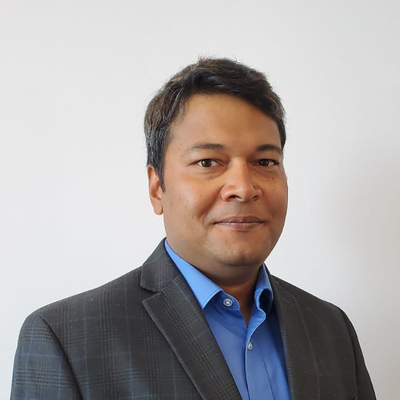
Partha Mishra
Senior Director, Data and Analytics
The "persist everything" era of data architecture is ending. Microsoft Fabric is the first platform that lets organizations make a genuine choice: persist strategically in OneLake, access external data via shortcuts and mirroring, or let AI agents retrieve directly from source systems at runtime - all under one security and governance model. This session explores the decision framework: when does persistence remain critical, and when can agents reason on-demand? Learn how the semantic layer - the Fabric IQ that grounds agents in trusted business data - becomes the governance backbone for agentic queries, and how leading organizations are compressing implementation timelines from months to weeks - shifting from project delivery to efficient, repeatable, scalable outcomes.
Friday 2:00 PM - 3:00 PM · C102
Beyond Monitoring: AI-Driven Spark Optimization in Microsoft Fabric

Anu Venkataraman
Senior Program Manager, Microsoft

Virginia Roman
Senior Product Manager, Microsoft
Join this demo by Microsoft AI and Spark experts to see how Fabric takes Spark observability to the next level! Learn how to stream Spark logs to Eventhouse using Diagnostic Emitter. See Fabric AI/ML tooling in action to detect bottlenecks, predict resource impact, and suggest code improvements to optimize performance and cost. Visualize the insights and recommendations in Real Time Dashboard.
Friday 3:15 PM - 4:15 PM · C108-C109
Demystifying Spark Profile Optimizations in Microsoft Fabric
Thibauld Croonenborghs
Data Engineer at AE
Optimizing Spark workloads in Microsoft Fabric can be a complex endeavor, given the array of available configurations and techniques. Terms like V-Order, Z-Order, and considerations for read-heavy versus write-heavy profiles often add to the confusion. In this session, we'll bring clarity to these concepts, offering a structured overview of each optimization strategy.